
By Jonathan Jackson BSc (Hons) Chinese Medicine | Acupuncturist & Fertility Coach
Introduction
Endometriosis is one of the most prevalent and poorly understood gynaecological conditions of our time. It affects an estimated 1 in 10 women and those assigned female at birth during their reproductive years — yet despite its prevalence, the average time from the onset of symptoms to a confirmed diagnosis is still reported to be between seven and ten years. That gap alone speaks volumes about how much we have yet to learn.
For those living with it, endometriosis can be profoundly debilitating — not just physically, but emotionally, relationally, and professionally. It can reshape a person’s entire experience of their body, their fertility, and their daily life. And yet it is frequently dismissed, misdiagnosed, or under-treated.
This article aims to offer a grounded, thorough overview of what endometriosis is, what current science tells us about its origins, how it may affect fertility and wellbeing, and why understanding the body’s wider internal environment matters when thinking about this condition. Towards the end, I also share a personal conceptual hypothesis — clearly labelled as such — about cellular health and hormonal signalling that I believe deserves further exploration.
What Is Endometriosis?
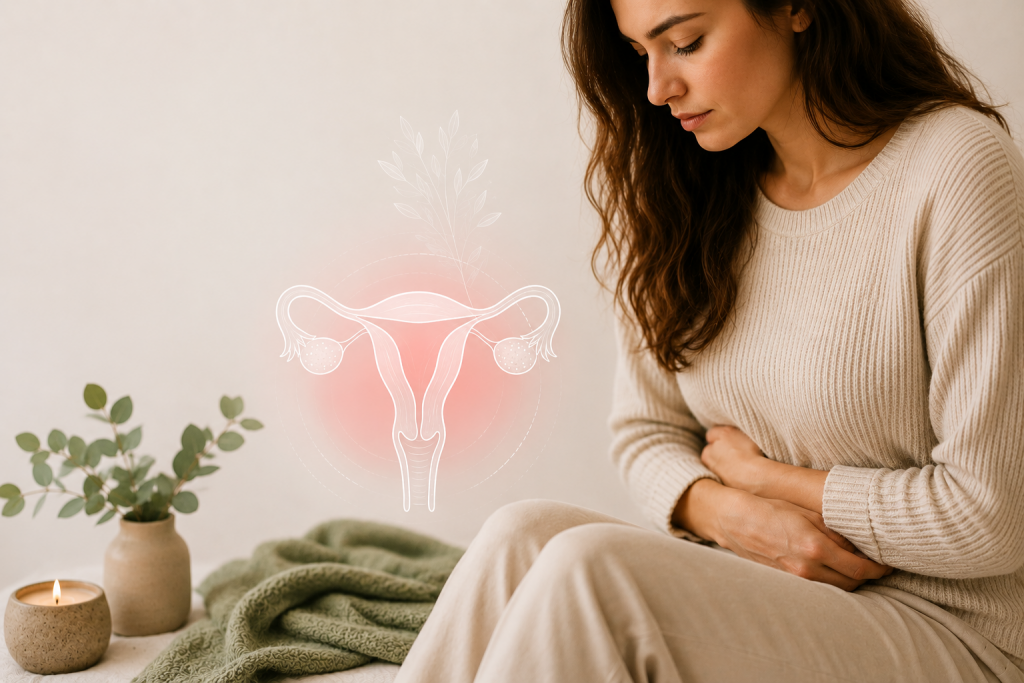
Endometriosis is a chronic, inflammatory condition in which tissue that resembles the endometrium — the lining of the uterus — grows outside of the uterus itself. These lesions, sometimes called implants or deposits, are most commonly found on the ovaries, fallopian tubes, the outer surface of the uterus, the bowel, the bladder, and the peritoneum (the lining of the pelvic cavity). In rarer cases, endometriotic tissue has been identified in the lungs, diaphragm, and even the brain.
Unlike the endometrium inside the uterus — which builds up and sheds each month during menstruation — these misplaced deposits have no exit route. They respond to the same hormonal fluctuations, becoming inflamed and breaking down, but the resulting blood and tissue have nowhere to go. Over time, this repeated cycle of inflammation can lead to the formation of scar tissue (adhesions) and, in the case of ovarian involvement, cysts filled with old blood known as endometriomas or ‘chocolate cysts’.
The condition is chronic, progressive in many (though not all) cases, and remarkably complex. The size or extent of lesions does not reliably predict the severity of symptoms — some women with extensive disease report mild discomfort, while others with minimal visible endometriosis experience severe, disabling pain. This inconsistency is one of the many reasons why researchers continue to look beyond the physical lesions themselves.
Recognising the Symptoms
The symptoms of endometriosis vary significantly from person to person, and many overlap with other conditions — which contributes substantially to diagnostic delays. The most commonly reported symptoms include:
- Dysmenorrhoea: severe, often debilitating menstrual pain, frequently described as far beyond normal period cramping
- Chronic pelvic pain: persistent pain in the lower abdomen or pelvis, not limited to menstruation
- Dyspareunia: pain during or after sexual intercourse, particularly with deep penetration
- Dyschezia and dysuria: painful bowel movements or urination, especially around menstruation
- Heavy or irregular menstrual bleeding, sometimes accompanied by spotting between periods
- Bloating and gastrointestinal symptoms, often described as ‘endo belly’
- Fatigue and low energy, which can be chronic and severe
- Fertility difficulties, including difficulty conceiving
- Mood disturbances, anxiety, and depression — both as direct symptoms and as responses to chronic pain
It is worth emphasising that some women with endometriosis are entirely asymptomatic, discovering the condition only when investigating fertility challenges or during unrelated surgery. The absence of pain does not mean the absence of disease, and the presence of severe pain does not necessarily correlate with the extent of lesions.
What Does Current Science Tell Us?
Despite decades of research, the precise cause of endometriosis remains elusive. It is best understood not as a single-cause condition but as a multifactorial one — shaped by genetic predisposition, immune function, hormonal environment, and potentially wider systemic and environmental factors. Several scientific theories have emerged, each capturing a piece of a complex puzzle.
Retrograde Menstruation
The most widely cited theory — proposed by John Sampson in the 1920s — holds that during menstruation, endometrial cells travel backwards through the fallopian tubes and into the pelvic cavity rather than being shed through the cervix. These misplaced cells then implant on pelvic structures and begin to proliferate.
There is substantial evidence that retrograde menstruation is extremely common — occurring to some degree in the majority of menstruating women. Yet only a fraction of those women develop endometriosis. This strongly suggests that retrograde flow alone is insufficient to explain the condition. Something else must determine whether those displaced cells survive, implant, and proliferate — and that ‘something else’ appears to involve the immune system.
Immune Dysfunction
In most women, the immune system identifies and clears misplaced endometrial cells that enter the peritoneal cavity. In women with endometriosis, this clearance mechanism appears to be compromised. Research has consistently shown that women with endometriosis have altered immune profiles — including elevated numbers of activated macrophages in the peritoneal fluid, reduced natural killer (NK) cell activity, and dysregulated T-cell responses.
These immune changes may allow displaced endometrial cells to evade destruction, attach to peritoneal surfaces, and establish themselves as functioning lesions. Importantly, it is not yet clear whether immune dysfunction is a cause of endometriosis or a consequence of it — or, as many researchers now suspect, both: a bidirectional relationship in which existing lesions further dysregulate the immune environment, perpetuating the cycle.
Inflammation
Chronic inflammation is both a hallmark and a driver of endometriosis. The peritoneal fluid of women with the condition typically shows elevated levels of pro-inflammatory cytokines, including interleukin-1 (IL-1), IL-6, IL-8, tumour necrosis factor-alpha (TNF-α), and prostaglandins. These inflammatory mediators promote the survival, proliferation, and vascularisation of endometriotic lesions.
Inflammation also amplifies pain — sensitising nerve fibres within and around lesions, contributing to both the local pain of endometriosis and the more widespread central sensitisation that many affected women experience. The inflammatory environment of endometriosis is further linked to oxidative stress, which damages surrounding tissues and may impair egg quality, tubal function, and the receptivity of the uterine lining.
Hormonal Influences and the Role of Oestrogen
Endometriosis is an oestrogen-dependent condition. Oestrogen promotes the growth and survival of endometriotic lesions, while the condition itself appears to create a local environment of oestrogen excess. Research has shown that endometriotic tissue contains elevated levels of the enzyme aromatase — which converts androgens into oestrogen locally within the lesion — and reduced levels of the enzyme 17β-hydroxysteroid dehydrogenase type 2, which normally inactivates oestradiol.
This creates a cycle of local oestrogen amplification that drives lesion persistence and growth, even in the context of otherwise normal systemic oestrogen levels. Additionally, endometriotic tissue often shows resistance to progesterone — the hormone that counterbalances oestrogen and is essential for preparing the uterine lining for implantation. This ‘progesterone resistance’ means that the normal protective and regulatory effects of progesterone are diminished, allowing oestrogen-driven growth to continue unchecked.
Progesterone resistance in endometriosis is an area of significant ongoing research. It appears to arise from changes at the cellular level — including altered expression of progesterone receptors and downstream signalling disruptions — rather than from low circulating progesterone alone. This distinction is important, and I will return to it in my personal theory section below.
Genetic Factors
There is a clear hereditary component to endometriosis. Women with a first-degree relative (mother, sister, daughter) who has the condition are estimated to be five to seven times more likely to develop it themselves. Twin studies further support a genetic contribution, with higher concordance rates in identical twins compared with fraternal twins.
Large-scale genome-wide association studies (GWAS) have identified numerous genetic loci associated with endometriosis risk, implicating genes involved in hormone metabolism, immune regulation, tissue remodelling, and cell proliferation. However, no single gene has been identified as causative — consistent with the view that endometriosis is a polygenic, complex condition shaped by both genetic predisposition and environmental influence.
Other Proposed Mechanisms
Beyond the major theories, researchers continue to investigate a number of additional mechanisms. These include:
- Coelomic metaplasia: the possibility that certain peritoneal cells retain the capacity to transform into endometrial-like tissue under the influence of hormonal or environmental triggers
- Lymphatic and vascular spread: the dissemination of endometrial cells through lymphatic or blood vessels, which may explain rare distant sites of endometriosis
- Stem cell theories: the hypothesis that endometrial stem cells, originating in the bone marrow or uterine basal layer, may play a role in lesion establishment
- Microbiome dysbiosis: emerging research suggests associations between gut and reproductive microbiome imbalance and endometriosis, though causal relationships have not yet been established
What is clear from the breadth of this research is that endometriosis does not have a single, straightforward cause. It is a condition shaped by the interplay of multiple biological systems — genetic, immune, hormonal, and inflammatory — and almost certainly influenced by the wider physiological environment in which those systems operate.
Endometriosis and Fertility
Endometriosis is one of the leading causes of female-factor infertility, affecting an estimated 30–50% of women who experience difficulty conceiving. The mechanisms through which it impairs fertility are multiple and interconnected.
In severe cases, the most direct pathway is structural: extensive adhesions can distort pelvic anatomy, block fallopian tubes, or encapsulate the ovaries, physically preventing egg pick-up and fertilisation. Endometriomas — ovarian cysts — can reduce ovarian reserve and compromise the quality of the eggs produced, in part through the toxic effects of the iron-rich fluid they contain.
But endometriosis affects fertility even in the absence of severe structural damage. The inflamed peritoneal environment is hostile to egg and sperm alike. Elevated levels of reactive oxygen species impair egg quality and may damage sperm DNA. Altered tubal motility may disrupt the transport of eggs and embryos. The immune-inflammatory environment of the uterus may reduce endometrial receptivity, making implantation less likely even when fertilisation occurs.
Progesterone resistance further compounds the fertility challenge. A normal luteal phase requires adequate progesterone signalling to prepare the endometrium for implantation and support early pregnancy. When progesterone responsiveness is impaired at the cellular level, even physiologically normal progesterone levels may fail to exert their full effect.
It is important to note that endometriosis does not make conception impossible for most women. Many women with the condition conceive naturally or with relatively modest intervention. The impact on fertility exists on a spectrum, shaped by the severity and location of disease, the degree of ovarian involvement, the woman’s age, and the wider physiological context of both partners.
Quality of Life and the Wider Impact
The impact of endometriosis extends far beyond its physical symptoms. Chronic pain, fatigue, and the uncertainty of a poorly understood condition carry a substantial psychological and social burden. Research consistently shows that women with endometriosis have significantly higher rates of anxiety, depression, and reduced quality of life compared with the general population.
The diagnosis journey itself is often traumatic. Years of pain dismissed as ‘normal periods,’ multiple consultations producing no answers, and the experience of not being believed are reported across endometriosis communities worldwide. The psychological toll of this is real and should not be minimised.
Endometriosis also affects relationships, sexuality, professional life, and social participation. Painful intercourse can strain partnerships. Unpredictable flares can lead to missed workdays and lost opportunities. Fertility struggles can create profound emotional pain, grief, and strain between partners.
A truly holistic approach to endometriosis must acknowledge and address this full spectrum of impact — not only the pelvic lesions, but the person living with them.
The Body’s Internal Environment
While endometriosis has clear biological drivers, it does not exist in isolation from the rest of the body. Increasingly, researchers and clinicians are recognising that the wider physiological environment — including nutrition, metabolic health, stress physiology, sleep, and systemic inflammation — may influence how the condition develops, progresses, and is experienced.
Nutrition and Metabolic Health
Several dietary patterns have been studied in relation to endometriosis risk and symptom severity. Diets high in trans fats and omega-6 fatty acids have been associated with increased risk in some studies, while higher intakes of omega-3 fatty acids — with their anti-inflammatory properties — have been associated with lower risk. Antioxidant-rich diets may help to mitigate the oxidative stress that characterises the endometriotic environment.
Blood sugar regulation, insulin sensitivity, and overall metabolic health are also relevant. Insulin resistance promotes inflammation and may influence oestrogen metabolism — both of which are directly relevant to endometriosis. Nutritional support for liver function (which plays a central role in oestrogen clearance) and gut health (which influences hormonal reabsorption via the oestrobolome) may also matter.
Stress and the HPA Axis
Chronic psychological stress activates the hypothalamic-pituitary-adrenal (HPA) axis and dysregulates cortisol rhythms. This has downstream effects on immune function, inflammatory tone, and reproductive hormone balance. Research suggests that chronic stress may exacerbate inflammatory conditions, and there is emerging evidence that HPA axis dysregulation may interact with the immune and hormonal features of endometriosis.
Stress does not cause endometriosis — but it may influence the internal environment in which the condition operates, potentially amplifying inflammation, altering immune surveillance, and affecting pain perception through central sensitisation pathways.
Sleep
Sleep is a period of profound cellular repair, immune regulation, and hormonal resetting. Melatonin — produced predominantly during sleep — has been shown to have direct anti-endometriotic properties in laboratory studies, inhibiting cell proliferation, reducing oxidative stress, and modulating immune activity. Chronic sleep disruption, conversely, promotes inflammatory tone and may reduce the body’s capacity for repair.
Systemic Inflammation
While endometriosis generates local inflammation, it also exists within the context of the body’s broader inflammatory status. Women with endometriosis often show evidence of systemic inflammatory dysregulation. Lifestyle factors that promote systemic inflammation — including poor diet, physical inactivity, chronic stress, and environmental toxin exposure — may create a physiological environment in which endometriosis is more likely to establish, persist, and cause symptoms.
Conversely, reducing systemic inflammatory burden through evidence-informed lifestyle choices is unlikely to ‘cure’ endometriosis, but may form a meaningful part of a comprehensive approach to managing it.
Jonathan Jackson’s Theory: A Cellular Perspective
Important: What follows is Jonathan Jackson’s personal hypothesis, not an established scientific fact. It is shared here as a conceptual framework for discussion and future exploration, not as an explanation for progesterone resistance or endometriosis that has been scientifically proven or validated.
The established science around progesterone resistance in endometriosis points to a disruption not of progesterone levels per se, but of how cells receive and respond to progesterone’s signals. This distinction opens an interesting conceptual door: if the issue lies partly in the sensitivity and function of the cells themselves, what determines how well a cell can receive and act upon a hormonal message?
My hypothesis begins with a basic biological principle: cells require adequate raw materials to function optimally. Every process that occurs within a cell — including the manufacture of receptor proteins, the transduction of hormonal signals, gene expression, and repair — depends on the availability of specific nutrients. Healthy fats are required for the integrity of cell membranes and the fluidity that receptor function depends upon. Amino acids are the building blocks of receptor proteins themselves. Vitamins and minerals serve as cofactors for enzymatic reactions that regulate gene expression and cellular communication. Sufficient energy substrate is needed for the cellular work of hormonal signalling.
My proposal is this: if the body is chronically undernourished, exposed to consistently poor dietary quality, or burdened by persistent inflammation, metabolic dysfunction, or high physiological stress, the quality of cellular function across many tissues may be compromised. Cells operating in such an environment may not build and maintain receptor infrastructure as effectively. Hormonal signals may be received less clearly, transduced less efficiently, or expressed in gene regulation less completely.
In the context of endometriosis specifically, I wonder whether impaired cellular health — arising from the internal physiological environment rather than from endometriosis-specific mutations alone — could potentially contribute to the reduced progesterone responsiveness that characterises the condition. If cells are not receiving the nutritional and metabolic support they need to function optimally, progesterone resistance may be, at least in part, a downstream consequence of that broader cellular insufficiency.
This is not to suggest that nutrition is the sole or even primary driver of progesterone resistance — the genetic, epigenetic, and molecular changes documented in the research are real and substantial. Rather, it is to suggest that the cellular environment may be a modifiable factor that influences how those mechanisms are expressed and experienced.
From this perspective, supporting the body’s internal environment — through nutrient-dense, anti-inflammatory food, healthy sleep, stress management, and the removal of factors that burden cellular function — may not be merely supportive care. It may be a meaningful attempt to optimise the conditions under which cells operate, potentially improving how well hormonal signals are received and acted upon.
I want to be clear about what this is and what it is not. This is a conceptual hypothesis, formed through years of clinical observation and engagement with the scientific literature, but it has not been subjected to controlled research. It is offered in the spirit of intellectual curiosity and clinical exploration, as a possible framework for thinking about the relationship between cellular health and hormonal responsiveness in endometriosis. It should not be taken as a treatment recommendation, a replacement for medical management, or a claim that lifestyle change will resolve progesterone resistance or cure endometriosis.
This is Jonathan Jackson’s personal theory and has not been scientifically proven. It is intended as a conceptual framework for discussion and future exploration, not as an established explanation for progesterone resistance or endometriosis.
Conclusion: Complexity Demands a Wider Lens
Endometriosis is not a simple condition, and it deserves not to be treated as one. The science tells us it is shaped by genetics, immune function, oestrogen biology, inflammation, and cellular signalling — none of which operate in isolation. What is increasingly clear is that the body’s internal environment — the physiological ecosystem shaped by how we eat, sleep, move, manage stress, and navigate the demands of modern life — is not irrelevant to the conditions through which diseases like endometriosis emerge and progress.
This does not mean that endometriosis is caused by lifestyle, nor that it can be cured by changing it. It means that the body is a system, and systemic conditions respond — at least in part — to the systemic environment. Supporting that environment intelligently, alongside appropriate medical management, is not an alternative to medicine: it is the broader context within which medicine works best.
For anyone living with endometriosis, my hope is that this article offers both grounding and perspective: that you are not simply your symptoms, that your biology is not fixed and unchangeable, and that there are always meaningful questions worth asking about the environment your body is living in.
—
Jonathan Jackson BSc (Hons) Chinese Medicine
Acupuncturist, Fertility Coach & Author of Drop in the Ocean
MindFix Acupuncture | Jonathan Jackson Health
Great content! Keep up the good work!
Thanks.